Six days to explore the fact of living

Member for

3 years 7 months
Submitted by octavi.planells on

From 21 to 26 February, science will once again take to the streets. The third edition of the City and Science Biennial invites us to reflect from multiple disciplines and points of view on the fact of living, and as a novelty it does so simultaneously in Barcelona and Madrid. The Barcelona programme has been curated by Helen Cole, Josep Perelló and Lluís Nacenta, and in Madrid, by Elea Giménez Toledo and José Manuel Sánchez Ron.
(Quantum) information is power

Member for

3 years 10 months
Submitted by ajbcnadmin on

Despite being over 100 years old, quantum physics is a young theory. It can therefore still hold some surprises for us. After the first quantum revolution, advances in understanding the theory and the technological developments that it led to have given rise to a new wave of applications based on the study of physical systems from a new point of view: any physical system contains information and when it interacts with another, an exchange occurs.

Observe, destroy, learn.

Member for

3 years 10 months
Submitted by ajbcnadmin on

Humans learn by observing and reflecting on what we see or perceive. Examining an object means interacting with it in some way. For example, to find out how fast a car is going, you need to take a picture of it. This means that a camera sends light to it (like a flash), this light bounces off the car and returns to the camera, which captures the information. In this case, the car is not affected by the light. But in the quantum world this effect is very different.

Inhabiting the limits

Member for

3 years 10 months
Submitted by ajbcnadmin on

Frontier research such as that which gave rise to quantum physics constantly works at the limits of what is known. If we make the analogy of a circle of light on a stage and assume that the illuminated area is knowledge and the area of ​​darkness contains all that is unknown, as knowledge increases and the circle of light widens, the perimeter of this circle, which is the limit between what is known and what is not, also increases.

The revolution of ideas

Member for

3 years 10 months
Submitted by ajbcnadmin on

We live in a time of great uncertainties (environmental, economic, social...) and great transformations as a result of technological developments. In this context, disruptive technologies, such as quantum and AI, do not only entail a technical evolution of our system, but also a change of paradigm and known models. Innovation is the key to facing the challenges of the current and future world, while opening up new areas of knowledge.

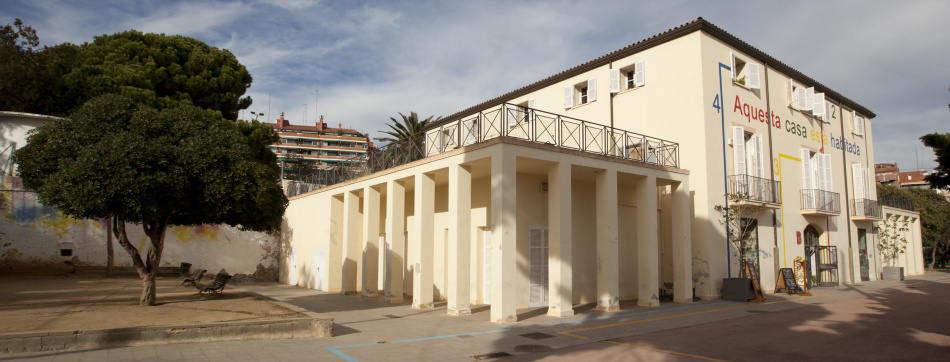
Guinardó Civic Center

  • Address
    • Ronda del Guinardó, 113, 08041 Barcelona

    • How to get there
    • District Horta-Guinardó

    • Neighborhood el Guinardó

  • Transports

A facility with a clear commitment to technology, physics, numerical sciences and engineering, which is materialised in its outreach programme Aula 141 and other activities for all audiences. The offer includes talks as well as weekend family workshops often framed in the maker and "do it yourself" philosophy.

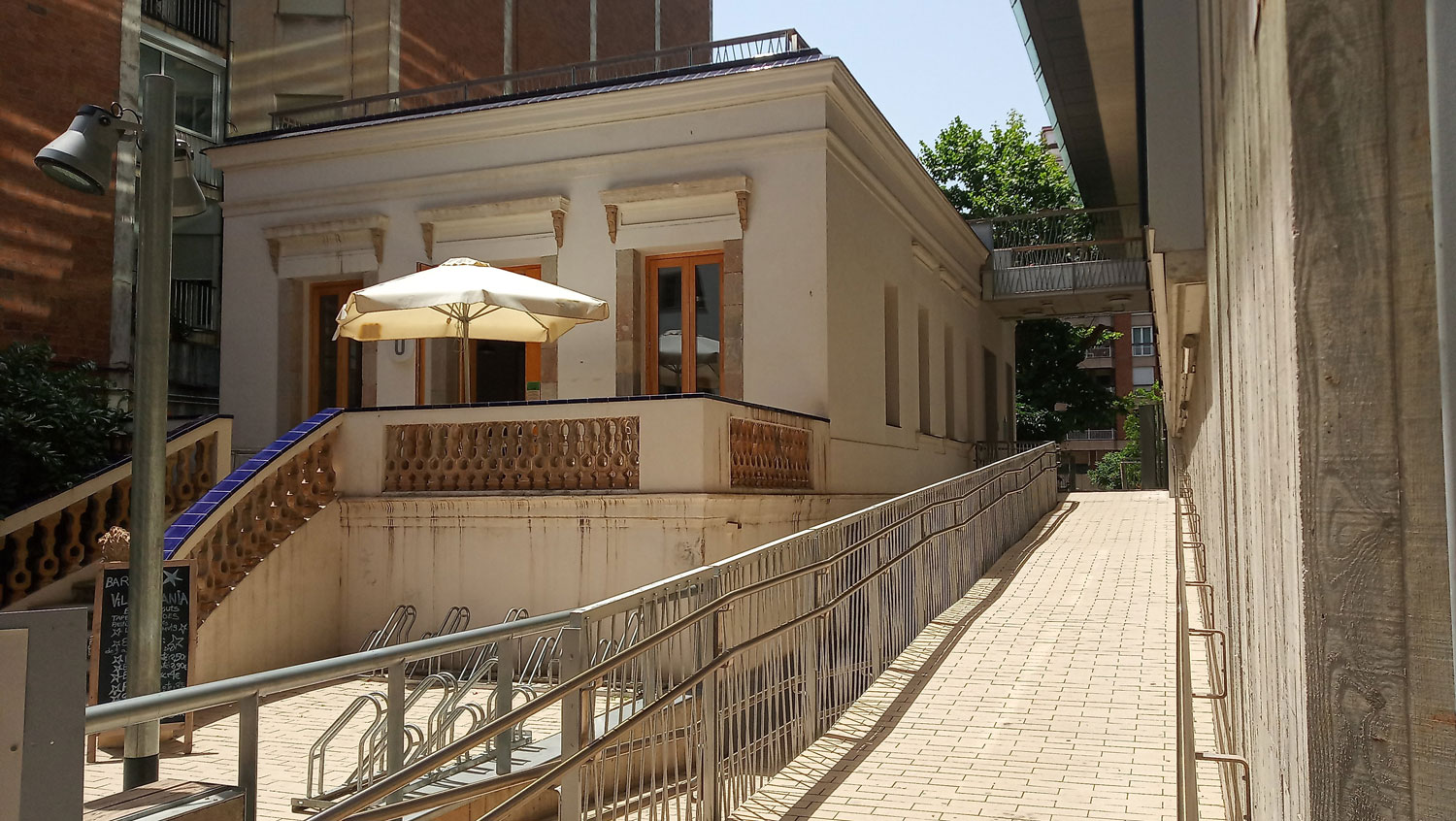
Vil·la Urània Civic Center

  • Address
    • Carrer de Saragossa, 29, 08006 Barcelona

    • How to get there
    • District Sarrià-Sant Gervasi

    • Neighborhood el Putxet i el Farró

  • Transports

A municipal facility in the Putxet and Farró neighbourhood built around the former Vil·la Urània, which was the residence of Josep Comas i Solà, an important Catalan astronomer and populariser who, among his duties, was director of the Fabra Observatory. The current Vil·la Urània takes over from Comas i Solà and makes bringing science closer to society one of its main missions.

Subscribe to